Burn

I’ve been aiming to make a post about this for a while. Here is one preliminary design document I made a while ago. It calls for something similar to the situation described in A Deepness in the Sky.

Game Beginning

You start out as a young man, fleeing a vicious civilization collapse. As the member of a wealthy Qeng Ho family and son of a fleet leader, you are in charge of the only ship that escaped. You are powered down in orbit of a gas giant, watching the aftermath of the Fall. A lot of your archives have been corrupted, so you need to find some other traders or find a world to raise up.

The very first thing you do is name your family branch. Then you figure out how to take inventory of your ship systems, and how to scan surrounding space. You learn about light-lag. You have just enough fuel to get up to operating velocity. You can choose a target system.

Your aim is to become the leader of the Qeng Ho. This is not an easy feat; the Qeng Ho is a diffuse trading race, with no clear organizational hierarchy. There are several trading “families”, each with large offshoot branches (e.g. Vinh 2.0.3). The objective is to gain enough influence, and then call a meeting of the Qeng Ho. At this meeting you either convince all the families to follow you, or perform a hostile takeover.

You have as many years as are in your life to do this. Note that if you meet a civilization with hyper-advanced medical technology, this means a time bonus. You do have cryo-freeze for the time in transit between stars.

Personal Mechanics

Throughout the game there are personalities on your ship and on other ships that you can talk with. What you say affects what they think of you. If they hear bad things about you from others, they will enter into relations with poor expectations. Reputation influences the trades you can get, as well as favors you can ask.

If you gain a high enough reputation and interact enough with a person, you may become friends. You are not notified whether or not they consider you a friend until you bring it up. Friends will vouch for you or join in on a plan. Friends are much more likely to answer a distress signal you put out.

Traders that are well known often have available profiles. When you trade for someone’s profile, you can see their reputation with others, their personality, and most of their history. By gaining enough reputation with a person, you can find out what they think of other people.

Interstellar Travel Mechanics

A Bussard ramjet is used to travel quickly between star systems. A ramjet can only go so far before the mechanism breaks down. A ramjet needs to move at a certain fraction of the speed of light in order to scoop up enough fuel to continue operating. While flying above that threshold, your fuel tanks fill up. When decelerating, accelerating, or maneuvering, you burn fuel without regaining any. It is only possible to accelerate up to 30% the speed of light; a lot of energy is spent accelerating floating interstellar hydrogen up to your speed.

Ramjet engines can not be repaired on the fly. In order to fully repair an engine, you need to trade with a civilization that has the requisite technological level. This means that you may have to raise a civilization to high-tech in order to continue flying.

If your engine breaks down mid-flight, you will very slowly lose speed (from colliding with interstellar particles), and continue to drift until you either exit the galaxy, crash into a star, or are picked up.

Note that different regions of space have different interstellar medium densities. For instance, our local cluster lies inside a relatively sparse region, making ramjets less feasible. One aspect of choosing a destination in the game is navigating around low-density “bubbles”.

Choosing your target is important. Since you can only hear transmissions from the past, you have to judge whether or not a civilization will be as advanced as you want it to be when you arrive. Flying to a system that is at a peak level of technological advancement will probably have collapsed by the time your fleet arrives. This just means you have to spend time (although you have cryogenics, you still usually come out of it every so many months to make sure the fleet is still on track) helping them get back up to a sufficient level to repair your fleet.

Trading Mechanics

Planetary civilizations rarely want materials. They can mine almost everything they need from their system, and the price of lugging raw materials across interstellar space is too high for you. The exception is high-tech equipment. Civilizations will pay dearly for technology that they either cannot physically manufacture (as with Beyond relics) or are nowhere near the technological sophistication needed to synthesize the tech.

Civilizations value information more than anything. A faction will pay a grand sum for anything that will let them dominate their opponents. Advanced secrets help advanced civilizations keep their expanding infrastructure under control. Usually you can broadcast such information ahead of you, as long as its encrypted. This gives the civilization warning that you are coming, and when you get there you can trade away the keys needed to decrypt the information (on this note, the Qeng Ho constantly broadcast a certain amount of information for free to make sure that civilizations they meet have similar measurement standards, language, etc.).

Conversely, traders have a huge store of knowledge, but lack the infrastructure or resources to maintain themselves. Spacefleets will often bargain limited pieces of technology in order to buy volatiles, fuel, and new equipment. Sometimes civilizations will provide these for free to weasel better deals from you.

Occasionally a civilization will become exceedingly advanced in one area of technology. They will invent something truly revolutionary. If you get your hands on one of these pieces of technology, you will have leverage over all other Traders. You may have to bargain hard to wrest the technology from the civilization at hand.

Combat Mechanics

Be warned. Consistent use of weapons will cause other traders to shun you and make civilizations bar you from their systems. Someone might even try to hunt you down if you destroy their civilization but leave even part of a defense fleet.

Space combat is a fickle subject to approach. It is best summed up by these two pages on Atomic Rockets, although every page there provides good insight.

Interplanetary Flight

This will probably be some sort of simplified KSP-like interface. That is, you initiate maneuvers to change orbit. The problem here is balancing technical details against flexibility and realism. Optimally, players should be able to identify their desire to conserve fuel against time constraints, and let the computer select the best orbital maneuvers to transfer between planets, space stations, Lagrange point colonies, etc. However, because players may want to do wonky things in orbit during a battle sequence (establish oblique orbits, do hard burns, etc.)

I guess you could distinguish between normal navigation and battles. Battles would probably happen around one central body, unless there was a moon involved. However, battles would probably happen really fast (over in minutes) or really slow (taking months).


And that’s as far as I got in describing it.

Obsessive Rationalization of Unrealistic Genres

I am constantly amazed and disappointed by people’s perpetual insistence on willful ignorance and disregard of logic. It is common to tout that people are able to “distinguish reality from fiction”, but I am finding that hard to believe. This ailment is especially prevalent in fans or supporters of a particular lore; enjoyment of a genre appears to be a debilitating disease that leaves its victims completely incapable of making concessions to critics.

Let’s examine two examples. First, zombie lore. The genre is wide and diverse, but is generally accepted to be a gross fabrication and completely improbable, right? Nope. There is a fixation on coming up with more and more “realistic” explanations of how a zombie apocalypse could “actually” come to be. This is true both in media — we see the introduction of terms like “infected” to make the scenarios seem more authentic — and in the fan culture surrounding it. Look at any article on the Internet pointing out the most obvious reasons that a zombie apocalypse would never arise, and you will see a flood of comments defending the feasibility of such a scenario. Do they think that pointing out the unrealism of the genre is somehow offensive? That explicitly distinguishing reality from fiction (in a genre that is constantly trying to move the latter towards the former) somehow invalidates the fiction? It boggles my mind that people feel the need to defend the feasibility of a clearly fictional and improbable scenario.

But this feeling of wonder is only compounded whenever I accidentally wander near Star Wars or Star Trek fans. Both these franchises are clearly future fantasy (where technology serves only to further the plot, as opposed to hard science fiction, where there is a clear bi-directional interplay between the two). Yet many fan sites are created to help flush out the technological lore and attempt to apply rational, scientific explanations to the events in the media that are clearly only in service to the plot. If you point this out to a fan, they will become indignant and start explaining their way around any obstacle you toss at them. Never mind that the whole thing is fictional and doesn’t actually need to be scientifically accurate in order to be entertaining (and in fact was never intended to be scientifically accurate). This madness continues to the degree that later productions in the franchise may even try to explain some of the happening with science, but 9 times out a 10 this only bungles things up further.

Anyways, I wish die-hard fans would accept that they are fans of a fictional entertainment franchise that not only isn’t realistic or feasible, but in fact doesn’t need to be in order to be entertaining. Being unrealistic does not invalidate zombies or Star Trek or Star Wars in any way. So get over the fact that none of those franchises make any damn sense.

Sim State

I’ve been meaning to write this post for a while. This idea really started when I watched Day[9] play the new Sim City, and then picked up Sim City 4 again. I wanted to create a game which brought the ideas of micromanaging infrastructure and government into a larger scale. The player would be able to control education, government type, military, trade, etc. Eventually it grew into a sort of “third-world country simulator”, since that seemed like the most interesting route to people I pitched the general concept to.

The basic premise is that you are the leader of a small country, recently put in power by a violent revolution. This country is located in a faux South or Central America, but there is also the possibility for having multiple templates: African, Southeast Asian, etc. The player can only really see the small land area he controls, plus some of the bordering sovereignties. There is no global map (and this isn’t a game about conquest), but there are references to current global institutions (or fictitious characterizations thereof) like the UN and US, or WHO, etc.

Winning the game means pulling your country out of poverty and onto the world stage. This requires many parts, including building infrastructure, establishing governmental rule, and appeasing the international community. However, the win condition is gaining control over every province in your nation. Control just means being the dominant power faction. Routes to control include stamping out resistance (militarily) and appeasing interest groups. Thus a large part of the game is balancing political control; keep the military leaders on your side, stop workers from striking, and stay elected. The last one may mean establishing a dictatorship, rigging elections, or spending a lot of resources maintaining public image.

At the start of the game, your country is poor and unequipped. There are two forms of currency: money, and international repute. International repute can be spent on relief or treaties; perhaps getting a foreign oil company to leave your country. On the other hand, if you drive out the oil company by force, some factions in your own country may approve, while the international community may impose sanctions. Similarly, if their are pirate along the coast, you could demand tribute or try to exterminate them at a potentially great cost. If the world catches wind that you are allowing pirates to operate, however, you will lose repute.

The other form of currency is money. A little macro-economics comes into play here, since you have to manage your currency (printing money), and real “world dollars”. Rapid inflation can be bad for your industries, but it attracts tourists (but only to good parts – nobody is going to visit the region controlled by drug cartels). Real dollars come from exports, mainly. One way to get a boost in the beginning of the game is to exploit your natural resources: cut down rain forests, strip mine mountains, etc. However, you have to establish a more mature manufacturing industry at some point, otherwise you will exhaust your resources and fall back down into poverty.

In terms of infrastructure the player has to build, the main forms are education and industry. Industry includes transportation networks and resource collection, as well as processing. Industry also means municipal improvements, since nice cities attract high-tech corporations and commercial companies. Another route to improving the quality of your workforce, reducing crime, and eliminating overpopulation is education. Building schools takes a lot of resources for little immediate payoff, but it will start to improve your country greatly. It is also a great way for dictators to indoctrinate the population.

Late-game opportunities may include hosting Olympic Games or researching nuclear technology.

As you can see, there is a lot of room for expansions; this is more of a framework for a game, rather than a fleshed out game idea. I know there are games like this, such as Tropico. I think this would be more political and deep than Tropico, but obviously I would aim to offer a different experience overall were I to build this.

Using Games to Educate

In the last few years we’ve seen the Internet playing a larger and larger role in education. Everyone seems to expect a revolution in education within 20 years. It’s possible, although I don’t think it will come from the direction that everyone thinks it will (see my post on online education). I want to give my two cents about an ancillary approach: videogames. Games don’t have to teach the students anything. In fact, I think they are much more useful as vehicles for the education. Games provide a background, a context, for new knowledge. For example, playing Deus Ex: Human Revolution (play chapters of a game as homework instead of reading chapters of a book?) could help spark discussion about the current situation of computers, implants, artificial intelligence, politics, etc. The experiences within the game outside of the lesson help students stay interested and apply the knowledge, even if subconsciously, beyond the classroom.

I’m going to focus on two games: Kerbal Space Program and Minecraft. Prmrytchr has a whole blog on using Minecraft (as well as other games) in the classroom, so I’m going to focus on the technical aspects.

the KSP splash

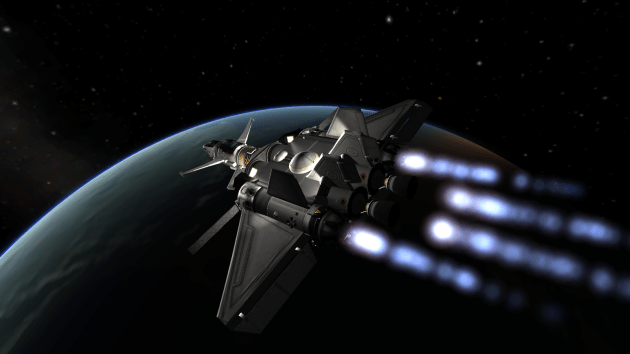
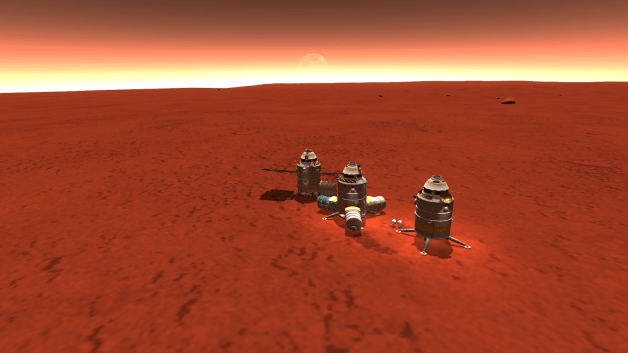
Kerbal Space Program (KSP) is an indie game currently under development with an open alpha available for purchase. In the game, you run the space agency of a particularly derpy alien race in their Sol-like system. In sandbox mode, you can throw together rockets, probes, rovers, space stations, planes, and planetary bases from a wide assortment of parts. Then you launch your constructions and control them to the best of your abilities.

KSP Screenshot KSP Screenshot 2

While hard to grasp at first, the game is incredibly fun. You do need a rudimentary understanding of kinematics to play well. This is the first step in its ability to act as an educational tool. While you can strap an engine onto a fuel tank and try to fly it, you quickly realize that doing anything impressive — such as putting an object in orbit — requires a bit of education. While you could watch tutorials, you could also get a lesson about basic kinematics and orbital mechanics from a present teacher. There’s an opportunity for lessons on engineering, as well.

As students become more proficient, more complex opportunities open up to them. Orbital rendezvous and gravitational slingshots get more involved physically. Spacecraft design, between mass conservation, fuel-mass ratio, reaction thruster placement, and properties of engines, is a great opportunity for springboarding into other physics. Other elements of spacecraft design that aren’t simulated in KSP, such as heat management, enter the realm of thermodynamics. Ancillary topics that arise when discussing space exploration can involve relativity and electromagnetic waves.

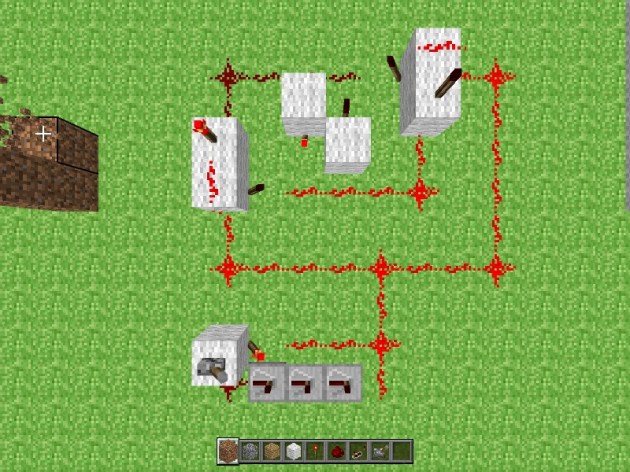
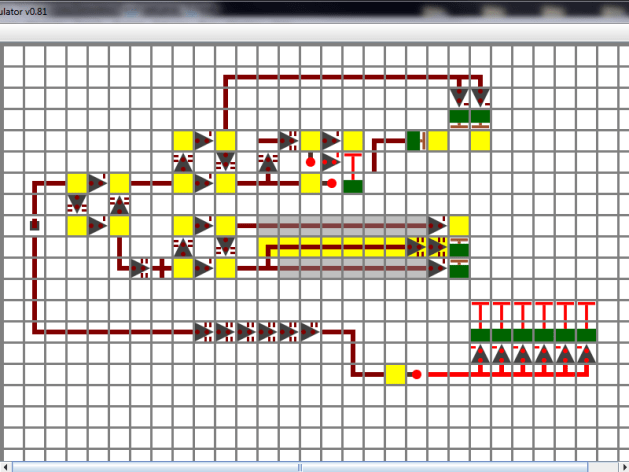
Minecraft, on the other hand, is about as physically unrealistic as you can get. However, it provides an awesome way to teach logic and economics. Even vanilla Minecraft has a growing arsenal of parts which allow rudimentary (or not so rudimentary) automation. Redstone is a powerful tool for doing any sort of logical manipulation — or teaching it. Watching your toolbox of gates and mechanisms grow out of a few basic ground rules is amazing. Creative minds are pushed to imagining new ways of using redstone, pistons, minecarts, and all the other machines being added in. While I’m not a fan, mods like Technic or Tekkit expand the array of basic parts at your disposal.
Multiplayer in Minecraft is an interesting case study of economic theory. Because the system varies so much from the real world, it provides an outside perspective on traditional economic theory. As you teach the basics of microeconomics, you can analyze why Minecraft’s multiplayer economy and identify how to restrict it. The ultimate goal of the class could be to establish a working economic system on a Minecraft server (perhaps through plugins/mods?).

Redstone Schematic Redstone Screenshot

Whether or not any of these are good ideas, it illuminates how games don’t have to be the primary vehicle of learning to be a useful educational tool. Games can merely be a springboard, a point of reference from which lessons emerge. The game keeps the students interested and grounded in the topic, while providing a useful outlet and vector of fortification for the knowledge they are getting in class.

Zombies, Pixels, and Cubes (Oh my!)

It’s no secret that many games these days have incurred that oh-so virulent infection. Like the T-virus, it has spread to every sector of the market, turning developers in shambling shells of their former selves. I speak, of course, of zombies. Just last year we saw WarZ, ZombiU, BlOps 2, and Amy. The year before that saw Yakuza: Dead Souls, Rise of Nightmares, Dead Island, and the rather well-named Zombies. That list excludes low-profile games and those which aren’t, in my opinion, terrible. Is this trend developer laziness, or perhaps a corporate influence? I wouldn’t be surprised if teams were pushed towards zombie games because, statistically, they make more money.

While it is reasonable when large-budget games are zombie-based, the same rationality falls short of protecting indie games. Zombie games are a prop-up, a cop-out for a developer who can’t come up with a better framework. Sure, it saves you the effort of establishing a complete universe (which is extremely tricky). That effort can go back into making other parts of the game better. But is the tradeoff worth it? To me, zombies don’t allow for a lot of avenues in terms of creative gameplay and storytelling. Are zombies a fall-back for those who need an extra kick in their games? Just search “zombie” in the Steam Store and sort by release date. Decide for yourself.

On a seemingly unrelated note, I want to talk about retro graphics. Let’s take a stroll down the Steam Greenlight aisle, shall we? In the first few pages we see:

  • MANOS: The Hands of Fate
  • Dead Colony
  • Deprivation
  • Hammerwatch
  • Potatoman Seeks the Troof
  • Dungeonmans
  • Topia Online
  • 16 Bit Arena
  • Spuds Quest
  • Legend of Dungeon

Keep in mind, these are those that are easily distinguishable by their image tile – many more lurk out there behind well-illustrated thumbnails.

What is the cause of this tsunami in indie game market that is retro graphics? Pixel graphics have the added bonus of nostalgic appeal for a certain generation. Art assets may be cheaper to produce. But, at least to me, pixel graphics convey a sense of harsh, delineated gameplay, where fun is equated with difficulty. My mind drifts to games like Megaman, where the reward for beating one level is to play the same level over again, with a different color tileset. I think the benefits of pixel graphics fall by the wayside when the decision is made. Pixel graphics, like zombies, are a knee-jerk reflex for the mediocre game developer. Often these developers are different, but I guarantee that there is more than one pixellated zombie game out there produced in the last five years.

Which brings me to cubes. Thanks, Minecraft. I both enjoy and loathe your trend-setting magnificence. It’s time for another stroll through Greenlight. Bonus points for games that have the word “Cube” in them.

  • Block Story
  • Slip
  • Logicubiks
  • Cell Emergence
  • Brain Cube Reloaded
  • King Voxel
  • Cubes and Zombies
  • Ace of Spades
  • Cube Park
  • Cube World

Ugh. *shiver*. I should do another post on how to not make your game look totally unappealing on Steam Greenlight. You would think choosing a good name and thumbnail would be at the top of everybody’s list. Apparently not.

A Forum for Original Thought

Nowadays, people hunger for original analyses and theses. Their pangs are reflected in the popularity of video series like The Idea Channel, Extra Credits, The Big Picture, and TED talks. Essentially, these are just spoken essays and presentations. They don’t really utilize the video medium, other than by coupling speech with a slideshow of images and (occasionally) video clips. Yet more and more these videos are supplementing written forms like blogs and columns. The intersection of unquenchable desire for consumable media (i.e. videos) and a veritable drought of mental stimulation makes spoken essays a desirable form of idea transmission.

Perhaps the number of quick-fact “educational” videos (e.g. Minute Physics, Smarter Every Day, CGPgrey, Vsauce, numberphile) stimulated the Internet’s interest in science. Indeed, there seems to be a vibe coursing through the tubes that “science is cool”, even if the way science is taught in schools isn’t. The realization that the scientific realm, learning, and, more generally, intelligent thought can be interesting has made people desire an influx of original analysis. It stimulates the brain, giving way to more thought in a way that other media has (mostly) failed to do.

In a world with an endless volume of consumable content, our brains may have become starved. Long periods of rumination can be painful and boring, so we flood it with cheap, throwaway media. Yet these times of inward reflection may serve an important purpose. Unfortunately, our over-stimulation by Internet videos, TV, movies, video games, and music has left us unable to focus on content-delivery platforms like text. We thirst for mental stimulation, yet cannot bear to gain it by taking a step backwards. This conundrum gave rise to the popularity of “spoken essays”. They inject creative, original thought quickly and painlessly. As we mull over this gem, we can further explore the subject in the video comments. Such discussion is evidenced by the considerable quality of comments on the aforementioned videos. Trolls, raging arguments over politics and religion, and insults have given way to (somewhat) thoughtful debates about the video’s analysis. Occasionally the next video in the series might make mention of some interesting points or surprising overall consensus concerning the previous video.

But is the classroom going extinct as a forum for intelligent discussion? Does it have a place in the furious online world? Perhaps. Although quick-fact videos give information, they very rarely delve into the depths of the subject and explain it in a way that lets the viewer solve entirely new problems on their own. They give the information top-soil, but hold back any sort of theoretical bedrock. A viewer might come out feeling smarter, but she will not have gained any tools in her arsenal of critical analysis and problem solving. This is partially due to the medium. Spending a longer amount of time to explore the subject drives off the initial appeal of the videos: quick learning.

However, some video series manage to seriously teach a subject while staying interesting. Crash Course has series on biology, literature, ecology, US history, and world history, served up by the eponymous vlogbrothers. They don’t necessarily go into the same depth that a yearlong course would, but that’s not really a problem here (it’s called “Crash Course” for a reason). The fact that dozens of videos are being spent exploring one subject is a start. Another faux-classroom video venue is Udacity. Udacity is a different beast; it is much more of an exploration into online courses than Crash Course. The physical classroom is woefully unfit to teach computer science. Udacity takes a stab at creating a classroom environment that takes advantage of its medium to deliver a more fitting CS education to a much greater volume of people, while still keeping a basic academic form.

Ultimately, I see a rise in the popularity of systems like Udacity, as well as series like Extra Credits and The Idea Channel. If educators want to truly grab the interest of new generations, they need to examine that which is already capturing attention. Rather than lamenting the advent of consumable, throwaway media, embrace it. There is a place for education in online videos and video games.

PlanetSide 2: First Impressions

I made a post a while ago about an MMOFPS/RTS. Turns out, this dream has come true, and it is PlanetSide 2 (it’s free-to-play. go download it right now!)

In the first two hours of play, I was zipping around in a dropship with a squad, capping points like crazy. I was rolling across vast plains in a tank convoy, or running along the ground with dozens of others as aircraft zipped overhead. I infiltrated an enemy compound and disabled a generator. I defended one of our larger complexes from a full-on siege. This game is amazing.

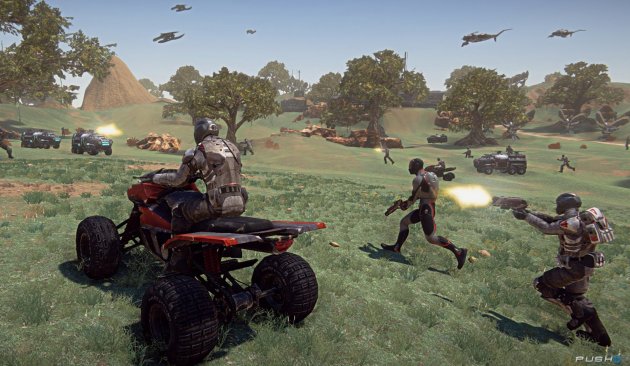
Actually a pretty typical thing to see.

It’s a little hard to get into, as you are just dropped into the action. You have to figure out what the vehicles do, the difference between classes, how the maps are laid out, what you are doing, etc. Basically, you have to figure out how the game works. But after you join an outfit (which are basically clans), the fun blossoms. You run and fight along side your teammates in giant, mile-wide maps. The 24/7 combat goes back and forth across a ravaged landscape. As you cower behind a rock and take potshots at the other factions, aircraft scream over head, blowing each other up. More than once I’ve had a smoking aircraft crash and break apart into a fireball meters from me.

The basic objective is to capture facilities, which are fairly far apart from each other. At the top-most level, the game is a back-and-forth struggle across a territory. The territory is broken in hex-shaped regions, which are linked to the nearest facility. Your platoon (under which there are squads) chooses where to focus their efforts, and then a blitzkrieg spearheads into fortified enemy territory and tears a hole in their defensive line. Overall, the best strategy is to keep a strong front line; if a facility gets isolated in otherwise enemy territory, it is usually much harder to defend.

Each facility has one or more capture points. In order to gain control of a facility, you need to hold all the capture points for a certain amount of time. One in control, facilities can have weapon-change stations, ground vehicle factories, or aircraft factories, depending on the size of the facility (larger facilities have more capture points). You get resources for kills (or assists) and captures. Resources allow you to buy equipment or vehicles. Different facilities give different resource bonuses to the owners.

The actual combat is OK. You can choose between a few classes: sniper, light assault (who gets a jetpack), medic (who can heal and revive people), engineer (who can build stuff) , and heavy assault (who gets a rocket launcher). At a equipment station, you can upgrade to mech-form, for a cost. Death bears little penalty, with only a short respawn and no deductions otherwise. In addition, medics can bring you back to life (for no cost). Each of the three factions gets different bonuses for each class, as well as different vehicles. The ground vehicles are a little annoying to control, and have a strange FOV. Aircraft are extremely hard to control, and I still haven’t figured out the best setup for them. But really the best part of the game is moving with a group of players; you feel like an insignificant part of the combat, not the star.

Really, that is the key part of this game. You understand that you are just one cog in the machine, that the battle doesn’t hinge on you. You also start to realize the scope of the battle raging around you. On the overhead map, you can see which territories are contested. You realize that at each one of those spots, there is a battle as massive and intense as the one you are in. Then you realize that there are two other maps on this server. At any point in time, someone is having a last-stand defense, someone is storming a citadel, someone is cruising over head in an aircraft and shelling ground forces, like an AC-130.

The only problem is that the game is fairly intensive graphically, and has some occasional issues with lag. Also, it is widely believed to have some sort of memory leak. But despite the shaky performance and occasionally flaky servers, this game is still a shining gem in today’s game industry.

9/10

A Solution for Difficulty Curves and Power Creep

Most games portray you as a hero of some sort. A common trope is for the hero to be either inexperienced at the beginning of the game, or lack his equipment. This gives a reason for why the hero does not just plow right up to the main baddie and kill him at the beginning. In any case, a lot of games suffer from a strangely shaped difficulty curve. The game starts out fairly easy as the player learns the ropes, then the enemies get harder. Finally, you max out your stats and the game begins to get easier again.

Granted, the best games suffer from this less, but a lot of games have trouble with this type of power creep. Spore is a prime example of a ridiculously easy endgame (the space stage was essentially a sandbox). Some developers solve this by making enemies more powerful as the player progresses. This can work in games where, for instance, the enemy starts to realize just how much of a threat you are. In open-world games like Skyrim, though, this makes little sense.

Yahtzee, of Zero Punctuation, mentioned in one of his Extra Punctuation an inkling of an idea for a game that is designed with this problem in mind. I have taken the liberty of gripping the nebulous concept by the horns and fleshing it out.

The game is based around the power suit you wear. It is a magnificent piece of High Technology. Unfortunately, this means that nobody is quite sure how it works. The machining of the piece is much too fine to replicate, in any case, which means any replacement parts have to come from other pieces of High Technology, which are few and far between.

At the start of the game you escape from the main fortress of the Bad Guys with some sort of Valuable Item (perhaps information). You raid the armory and steal the suit before plunging yourself deep into the wilderness around the citadel. You spend the game running from a cadre of pursuers, trying to make your way to the border. At every encounter with an enemy, it is up to you to protect your suit as much. Each blow is physically simulated and, depending on where you place armor, where the hit was, how hard it was, etc. a component on your suit has the potential of breaking. Parts also wear down over time.

The most critical part of the game is deciding how to keep your suit in working order. Some systems are critical, like the pneumatics that let you move (damage to arm parts may impair aiming speed, damage to legs may reduce speed or jump height, etc), and some are dispensable, like weapons. If a critical system receives a hit and becomes in critical danger of breaking down, you have to stop and either fix it with any spare parts you find, or scrap a non-critical system on your suit to get the essential parts.

This meta-game with the suit solves the problem of power creep. You are at maximum power at the beginning, but enemies are also at the greatest density. Slogging through the wilderness and fighting enemies wears your suit down, so by the end you are barely limping along. As time goes on, you have to choose which weapon or system to scrap for parts. This means that you get a sample of all abilities at the beginning, and can keep the ones that best suit your play style. One of Bioshock’s biggest problems was that there was no incentive to try new plasmids. I’m sure the majority of players just improved the starting set, because buying new powers was too much of a liability.

I like the idea of having the game being mostly free-world. You can choose the best path through the different types of terrain to avoid encounters. Cold environments, wet environments, and sandy environments all have different types of wear and tear on the suit. Roads are easy to traverse (meaning less food consumption and lower likelihood of suit failure) but are more likely to find troops on them. Towns and other population centers are more likely to hold supplies (food and maintenance items are critical for survival) and spare parts, but the citizens will raise the alarm if they see you, and there are likely to be troops in towns.

The catch is that any alarms you raise will alert the search parties to your general presence and means a higher chance of encountering troops. Same goes for any military engagements in which an enemy scout or survivor escapes. The game is part stealth (avoiding conflict), part tactics(managing the suit, choosing your world route), part combat (winning conflicts you get into). At the end, instead of a boss fight, you have a final battle at the border of the kingdom as the search parties converge on your position and a friendly militia comes down from the other side of the border to help you across.

The Future of the Source Engine

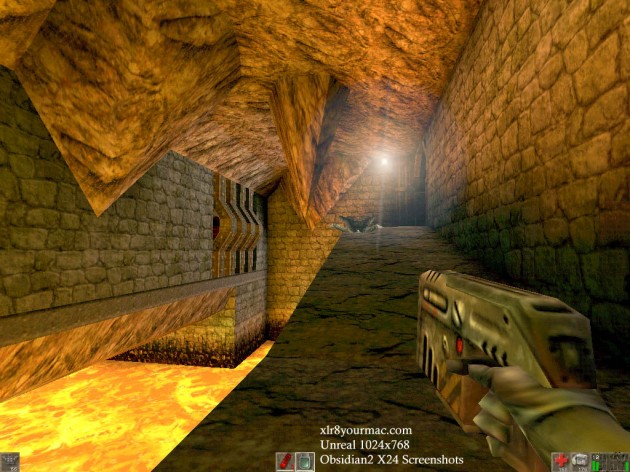
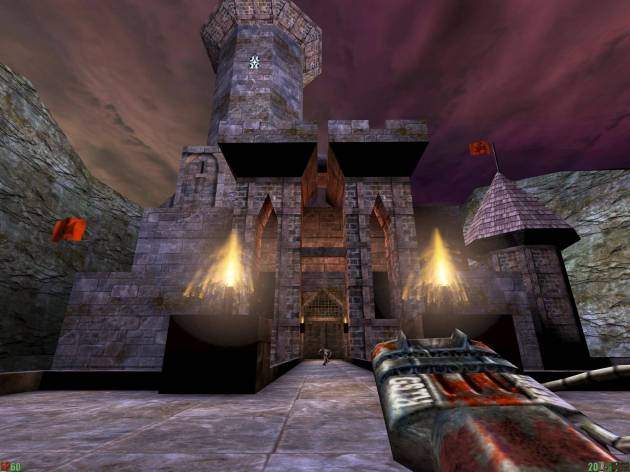
Valve’s Source and GoldenSource engines and Epic’s Unreal engines have had a long, acrimonious feud. Both Golden Source and the Unreal Engine debuted in 1998 in Half Life and Unreal, respectively. Both were considered revolutionary games at the time. Unreal blew technical and graphical expectations out of the water. Half Life left a legacy as one of the most influential games in the FPS genre.

Unreal Engine screenshot Unreal Engine screenshot
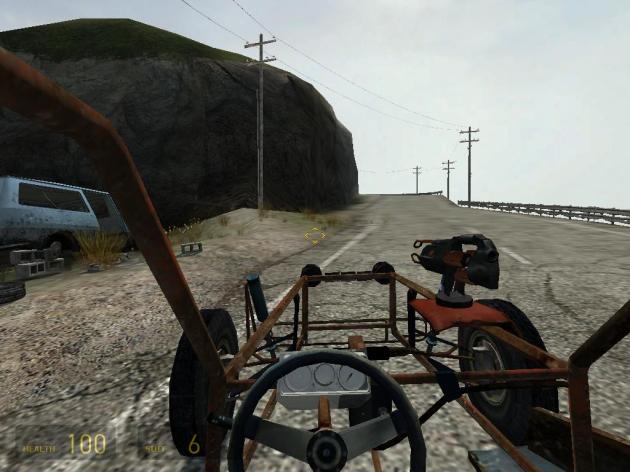
i2Zan0DmFkTfy Golden Source screenshot

Fast forward 6 years. Valve, in the meantime, has released Team Fortress Classic and Counterstrike, both extremely revolutionary games. The Unreal and Unreal 2 engines (the latter was released 2 years prior) had become extremely popular platforms for game developers, mostly because of the engines’ notable modularity and room for modification.

In 2004, Valve debuts the Source engine with Half Life 2, a ground breaking game that completely demolishes competition and sets a long-lasting legacy in terms of story, gameplay, and graphics. For comparison, Unreal Tournament 2004 was published the same year.

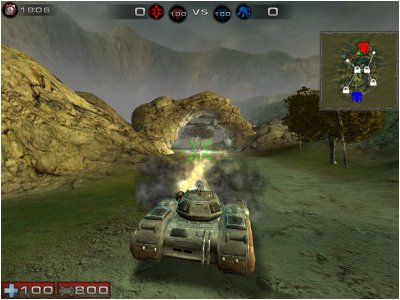
Unreal Engine 2 screenshot Source screenshot

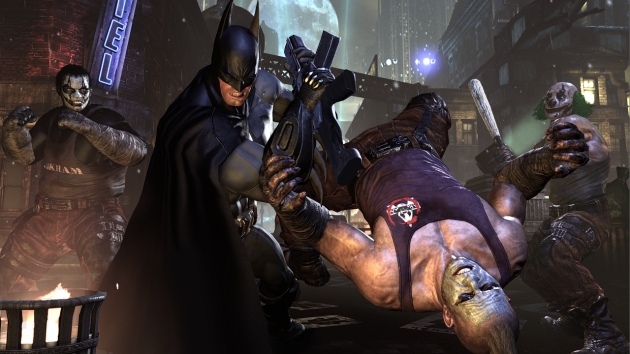
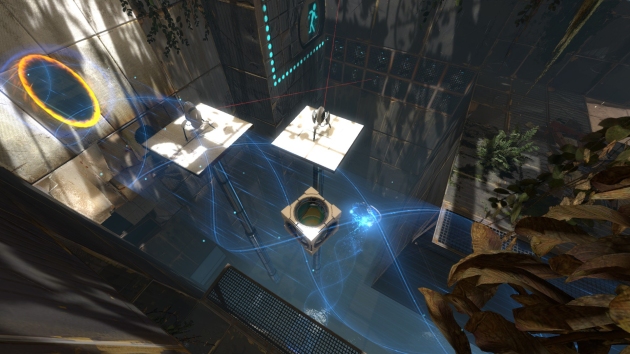
In another 7 years, Unreal Engine 3 has been released and games like Gears of War and Batman: Arkham City have been developed using it. Valve has just published their first widely supported game, Portal 2. The Source engine has been evolved over the years, and many graphical upgrades have been applied along with compatibility with major game consoles.

Batman: AC screenshot
screenshot-2

However, it becomes readily apparent that the visual styles of these two engines have diverged in the years since 1998. The Unreal line of engines have supported games like Bioshock and Mass Effect, but have also bourn the brunt of AAA games. Such games are known for their muted brown-grey color pallete, uninteresting story, and factory-made gameplay. Unreal Engine games are commonly criticized for having character models that look “plastic” (a result of game developers setting specular too high on materials), awkward character animations, and overuse of lens flares and bloom.

Games on the Source engine, on the other hand, consistently revolutionize some aspect of gaming. For example, Team Fortress 2, Portal, and Left 4 Dead are widely known for innovative gameplay. Unfortunately, Valve has lagged behind in terms of pushing the graphical frontier. Half Life 2 was smashingly good for its time, much in the same way that Halo stunned the gaming world back in 2001. However, every Source game since its debut has looked more and more aged.

Even worse, developers are driven away from using the Source engine due to a set of tools that have barely evolved since they were developed in 1998. Hammer, the level creation program, and Face Poser, the character animation blender, are unwieldy and unfinished; Source SDK tools are notorious for their bugs and frequent crashes.

Conversely, the Unreal toolset is streamlined and easy to jump into. This appeal has drawn more and more amateurs and professional developers alike. The editor allows you to pop right into the game to see changes, whereas the Source engine still requires maps to be compiled (which can take minutes) in order for the most recent revision to be played. Unreal’s deformable meshes dwarf the Source engine’s awkward displacement system.

However, I have a feeling that a couple of factors are going to come together and boost both engines out of the recent stigma they have incurred. The biggest factor is that at some point the AAA game industry is going to collapse. The other critical event is Half Life 3.

Yes! Do I know something you don’t? Have I heard a rumor lurking the Internet about this mysterious game? No. But I do know history. And that is more useful than all the forum threads in the universe.

Half Life was released in 1998. Half Life 2 was released in 2004. Episode 2 was released in 2007. Half Life 2 took 6 years to develop, despite being on a side burner for some of that time. By extrapolation, Half Life 3 should be nearing release in the next 2 years. However, circumstances are different.

The Source engine was developed FOR Half Life 2. Graphics were updated. But the toolset remained the same. In the time between HL2 and now, Valve has been exploring other genres. Team Fortress 2, Portal 2, and Left 4 Dead 2 all took a portion of the company’s resources. In addition, that last few years have been spent intensively on developing Dota 2 (which, by the way, was the cause of the free release of Alien Swarm). The second Counterstrike was contracted out. So Half Life 3 has been a side project, no doubt going through constant revisions and new directions.

However, unless Valve is going to release Day of Defeat 2 or Ricochet 2 (yeah right) in 2013, production on Half Life 3 is going to kick into high gear. There is one fact that drives me to believe even more heavily in this theory.

Since 2011, and probably even earlier, Valve has been pumping a huge amount of effort into redesigning their entire suite of development tools. It had become readily apparent to everyone at the company that the outdated tools were making it impossible to develop games efficiently.

“Oh yeah, we’re spending a tremendous amount of time on tools right now. So, our current tools are… very painful, so we probably are spending more time on tools development now than anything else and when we’re ready to ship those I think everybody’s life will get a lot better. Just way too hard to develop content right now, both for ourselves and for third-parties so we’re going to make enormously easier and simplify that process a lot.”
-Gabe Newell

Because both TF2 and Portal 2 have been supported continuously since their release, they have been the first to see the effects of this new tool development. Valve seems to have used these games as testing grounds, not only for their Free to Play business model and Steam Workshop concept, but also for new kinds of development tools. First, the Portal 2 Puzzle Maker changed the way that maps were made. In the same way that Python streamlines the programming process, the Puzzle Maker cuts out the tedious technical parts of making a level.

The second tool released was the Source Filmmaker. Although it doesn’t directly influence the way maps are made, its obviously been the subject of a lot of thought and development. The new ways of thinking about animation and time introduced by the SFM are probably indicative of the morphing paradigms in the tool development section at Valve.

Don’t think that Valve is going to be trampled by any of its competitors. Despite Unreal Engine’s public edge over the Source engine, especially with the recent UE4 reveal, the AAA game industry is sick, and no other publisher has a grip on the PC game market quite like Valve does. And although 90% of PC gamers pirate games, PC game sales are hardly smarting. In fact, the PC game market is hugely profitable, racking up $19 billion in 2011. This is just a few billion shy of the collective profits of the entire console market. Yet the next best thing to Steam is, laughably, EA’s wheezing digital content delivery system Origin.

Numbers Source

Anyways, here’s hoping for Half Life 3 and a shiny new set of developer tools!

Why Richard Stallman is Wrong

I listened to an interview with Richard Stallman, and I truly believe he is wrong regarding the ethics of proprietary software and especially the fundamental beliefs behind computer and Internet usage.

Fundamentally, he assumes incorrect things. He says that people should be able to use computers for free. That doesn’t mean that having people pay to improve the experience is evil. I can decide to gnaw through a tree on my property for free, but I can obviously pay to have it cut down. Similarly, a user should be able to do anything they want for free, but should also be able to pay to either improve the experience, do it faster, or change the feel. The point at which you start getting involved with morality is when the development of proprietary software begins to interfere with the development of open-source software. However, I think that if proprietary software was somehow banned, the rate of development of open-source software would not increase by very much.

Stallman is fine with software developed for a single client, where the developer is paid for the development of free software, rather than the software itself. However, that is fundamentally the same as distributing proprietary software. The cost of the proprietary software represents the effort that went into making it, as well as upkeep for the company including other worker salaries and continued research and development. I do agree that such costs can get out of hand and that a ridiculous amount of money can end up going to those higher up on the corporate ladder. However, that is a necessary evil to keep high quality proprietary software pumping out at a rate faster that free software can be developed.

Although he demands that the functionality of ebooks mirror that of books, he doesn’t seem to make the same connection regarding proprietary software and its real world parallel: non-free services. Although you should be able to live in a house and use public transportation for minimal costs, you almost always buy furniture and hire services to make your life more comfortable. Similarly, proprietary software allows users to improve the aspects of their experience that they want to.

As I said before, Stallman discusses ebooks, and how you should be able to do the same with an ebook as you can with a regular book. However, as a completely different medium, you can’t just demand something like that. Suppose I demand that JPEGs be viewable in the same resolution as the paintings at a museum, for free. That doesn’t even make sense. Being a completely different medium, we need to approach ebooks in a completely different fashion. It would be nice to be able to easily share ebooks or sell them used. However, for an ebook to exist in an economic and material singularity similar to that of a paper book, proprietary software is absolutely necessary. Using Stallman’s logic, I can say that if you want a book to be freely available, write it yourself!

In some ways, open source philosophy (or at least Stallman’s) is like Communism. Everybody pools their resources and in return everybody gets the same, free software. However, as we see with many actual implementations of Communism, somebody who contributes resources may not need all the products. If I spend time coding, I want a video editor, not a database manipulator. The obvious solution is to have both developed and then have those who want the video editor to give their share of resources to that developer, and those who wanted the database software to the other.